
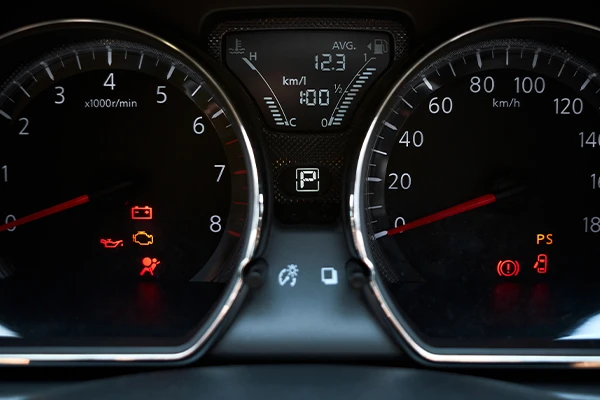
Dashboard warning lights are a crucial part of our vehicles, yet many are left ignored or unnoticed. You may see numerous lights and symbols that appear on your dash, usually with vague descriptions of the system the vehicle is warning you about. While not every light that pops up on your dashboard is a crucial warning, it’s still vital to understand what each light means to avoid accidentally ignoring a critical warning.
Colors of the Warning Lights
One of the easiest ways to narrow down the meaning of your warning light is the color of the light itself. While the symbol usually describes the system in need of attention, the color instead describes the importance of the warning and how quickly you should address it.
Blue/Green
Blue and green dashboard lights are utilized to signal that a system is on and operating. For example, the headlight icon is often illuminated in blue or green to let the driver know that it is currently active. These lights are there to provide information about active systems, not to alert you of a problem.
Yellow/Orange
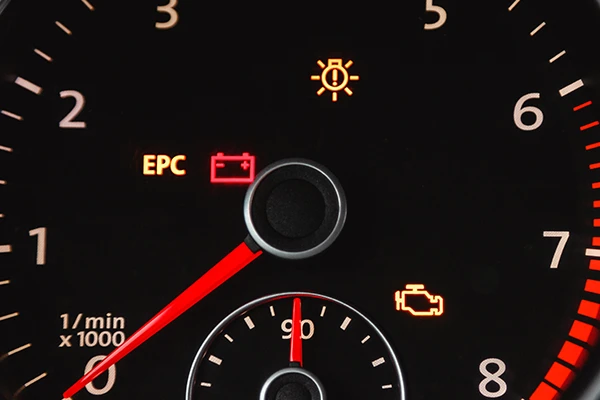
Yellow and orange lights are often used to show that a system needs to be serviced, repaired, or otherwise attended to. The most common of these is the low fuel light, but some systems and components may use yellow or orange warning lights. A common one you will see is the Check Engine Light.
Red/Blinking
If a light is either red and/or blinking on and off, it’s likely warning you of a critical issue that should be addressed immediately. This can be safety-related, such as the seatbelt or airbag lights, or a mechanical issue such as a misfire or overheating engine.
Common Dash Lights You Should Know
TPMS Light
Your tire pressure monitoring system (TPMS) is responsible for warning you of tires that are not inflated to proper pressure. Tires with low PSI can make driving your vehicle more difficult, reduce your fuel economy, and can also make it unsafe. When confronted with this light, you should check your tire pressure manually and have low tires inflated as soon as you can to ensure your vehicle is safe to drive.
Oil Pressure Light
One of the most important lights to keep an eye on is the oil pressure light. When this symbol appears on your dashboard, it’s telling you that the pressure within the oil system is not adequate. This issue can appear for a few reasons. This could mean your vehicle is critically low on oil, the flow of oil through the engine is impeded, or your oil pump is unable to circulate enough oil to properly lubricate the engine.
Traction Control Light
Your traction control light isn’t seen often, but when it is on, the driver should understand the meaning of it and how it affects the driving mechanics of the vehicle.
The traction control system is responsible for keeping your car under control in situations where traction is low, such as taking a corner on wet or snowy roads. The yellow light depicting a car fishtailing will illuminate when your traction control system is active and help your car make the proper adjustments when losing traction.
When this light is solid on the dash, it most often means the traction control system has been disabled. When the light is instead flashing, it may mean there is an issue preventing the system from working properly.
Diagnostic Services in Owings Mills, Eldersburg, Randallstown
At LMW Auto Repair, we combine advanced diagnostic technology with decades of hands-on experience to identify the root cause of your vehicle’s concerns. Our ASE-Certified technicians diagnose and repair engine problems for all makes and models, including European, Asian, and domestic vehicles. With locations in Eldersburg, Randallstown, and Owings Mills, we make expert engine repair convenient, transparent, and stress-free. Call or schedule an appointment with our friendly and knowledgeable team today!